
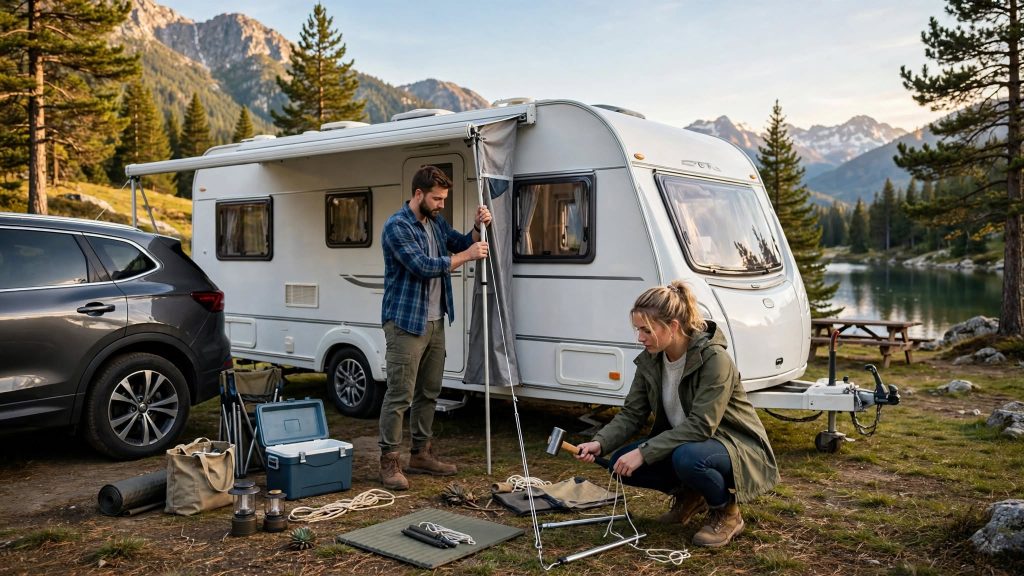
Caravan camping offers a practical way to explore new places while taking familiar comforts along for the journey. Instead of relying on hotels or fixed accommodation, travelers have their own space for sleeping, cooking, storing equipment, and relaxing. For first-time travelers, however, towing and managing a caravan involves more preparation than an ordinary road trip.
A successful first journey starts long before arriving at a campsite. Understanding your caravan, planning a realistic route, packing carefully, and learning basic campsite routines can make the experience far more manageable. This caravan camping guide covers the essential points beginners should consider before setting off.
Get Familiar With Your Caravan Before Traveling
Before planning a long trip, spend some time learning how the caravan works. Find the controls for the water system, electrical connections, heating, refrigerator, lighting, and other installed equipment. Check how doors, windows, storage compartments, and ventilation points operate.
It is also useful to practice setting up the caravan while you are still at home. Knowing where equipment is stored and how different systems work prevents unnecessary confusion after reaching a campsite.
Understand Weight and Loading
Caravan weight affects towing behavior, stability, and the suitability of the towing vehicle. Check the relevant weight limits for your caravan and vehicle rather than estimating how much equipment you can carry.
Heavy items should generally be stored securely and positioned with stability in mind. Avoid placing loose objects on counters or shelves while traveling. Even relatively light items can move considerably during braking or cornering.
Practice Towing Before Your First Caravan Trip
Driving with a caravan attached feels different from driving the tow vehicle by itself. Acceleration may be slower, braking requires greater anticipation, and turns need more space.
Practice in a quiet, open location before beginning a longer journey. Work on gradual braking, wide turns, reversing, and positioning the caravan accurately.
Reversing is often one of the more challenging skills for beginners. Small steering movements are usually easier to control than sudden corrections. If another person is helping outside the vehicle, agree on simple hand signals before starting.
Plan a Caravan-Friendly Route
Navigation should consider more than the distance between two locations. A route that looks short on a map may include narrow roads, difficult turns, steep sections, low clearances, or limited space for stopping.
Before departure, review the route with the dimensions and towing requirements of your setup in mind. Consider where you can safely stop for fuel, food, and rest.
Avoid creating an overly ambitious itinerary for your first caravan camping experience. Allowing extra travel time reduces the pressure to rush and gives you more flexibility when traffic, weather, or road conditions change.
Pack for Function Rather Than Filling Every Space
Caravans contain useful storage areas, but available cupboards do not need to be filled. Unnecessary equipment adds weight and makes it harder to keep the interior organized.
Focus initially on everyday essentials, including:
- Basic cooking utensils and suitable food storage
- Bedding and weather-appropriate clothing
- Fresh water and sanitation supplies
- Electrical connection equipment appropriate for your setup
- Leveling and stabilizing equipment
- A basic toolkit and spare essentials
- Outdoor chairs or simple campsite furniture
After a few trips, you will have a clearer idea of what you regularly use and what can stay at home.
Learn a Simple Campsite Setup Routine
Arriving at a campsite is easier when setup follows the same sequence each time. First, confirm where the caravan should be positioned and check the ground conditions. Consider access to utilities as well as the space needed for doors, awnings, or outdoor equipment.
Level and Secure the Caravan
A level caravan is more comfortable and can also be important for certain onboard equipment. Once positioned correctly, follow the manufacturer’s guidance for securing and stabilizing the caravan.
Only after the caravan is properly positioned should you move on to connecting services and arranging the living area.
Connect Utilities Carefully
Depending on the campsite and caravan, you may have access to electricity, fresh water, wastewater facilities, or other services. Learn how each connection works before the trip and use equipment designed for the relevant system.
Keep electrical equipment protected from unsuitable conditions and inspect cables, hoses, and connectors for visible damage. If you are uncertain about a connection or appliance, check the caravan or equipment manufacturer’s instructions rather than improvising.
Manage Water, Electricity, and Other Resources
One advantage of caravan camping is access to useful onboard facilities, but these resources still require management.
Water can be used surprisingly quickly when cooking, washing dishes, showering, and cleaning. Develop simple habits such as turning taps off when they are not needed and checking water levels regularly.
Electricity also needs attention, particularly when camping without a powered connection. Lighting, refrigeration, charging devices, heating, and other appliances can place different demands on the electrical system. Understanding which appliances use significant power helps you manage available energy more effectively.
Complete Basic Checks Before Every Departure
A short inspection before moving the caravan can prevent avoidable problems. Do not assume everything remains ready for travel simply because the caravan was correctly set up at the campsite.
Check that windows, doors, cupboards, roof openings, and external compartments are properly closed. Secure loose belongings inside and confirm that campsite connections have been disconnected.
Outside, inspect the towing connection and other relevant safety equipment. Walk around the entire caravan before leaving. This simple routine can reveal forgotten equipment, obstacles, or unsecured items.
Respect the Campsite and Other Travelers
Caravan parks and campgrounds are shared environments. Following site rules helps make the stay more comfortable for everyone.
Keep noise at a reasonable level, particularly during designated quiet periods. Dispose of rubbish and wastewater only in appropriate locations, and avoid allowing personal equipment to spread into neighboring pitches or access routes.
When leaving, check the area for rubbish and equipment. A campsite should be left clean and ready for the next visitor.
Conclusion
First-time caravan travel becomes easier when preparation takes priority over trying to master everything during the journey. Learn the caravan’s basic systems, understand loading requirements, practice towing, and choose routes that suit your vehicle and experience level.
Once at the campsite, a consistent setup routine and sensible management of water, electricity, and equipment can simplify daily life. Each journey will also show you which routines and supplies genuinely matter. With experience, caravan camping becomes less about managing unfamiliar equipment and more about enjoying the flexibility of traveling with your own mobile living space.